The Moral Line AI Cannot Cross: Why Responsibility Still Belongs to Humans
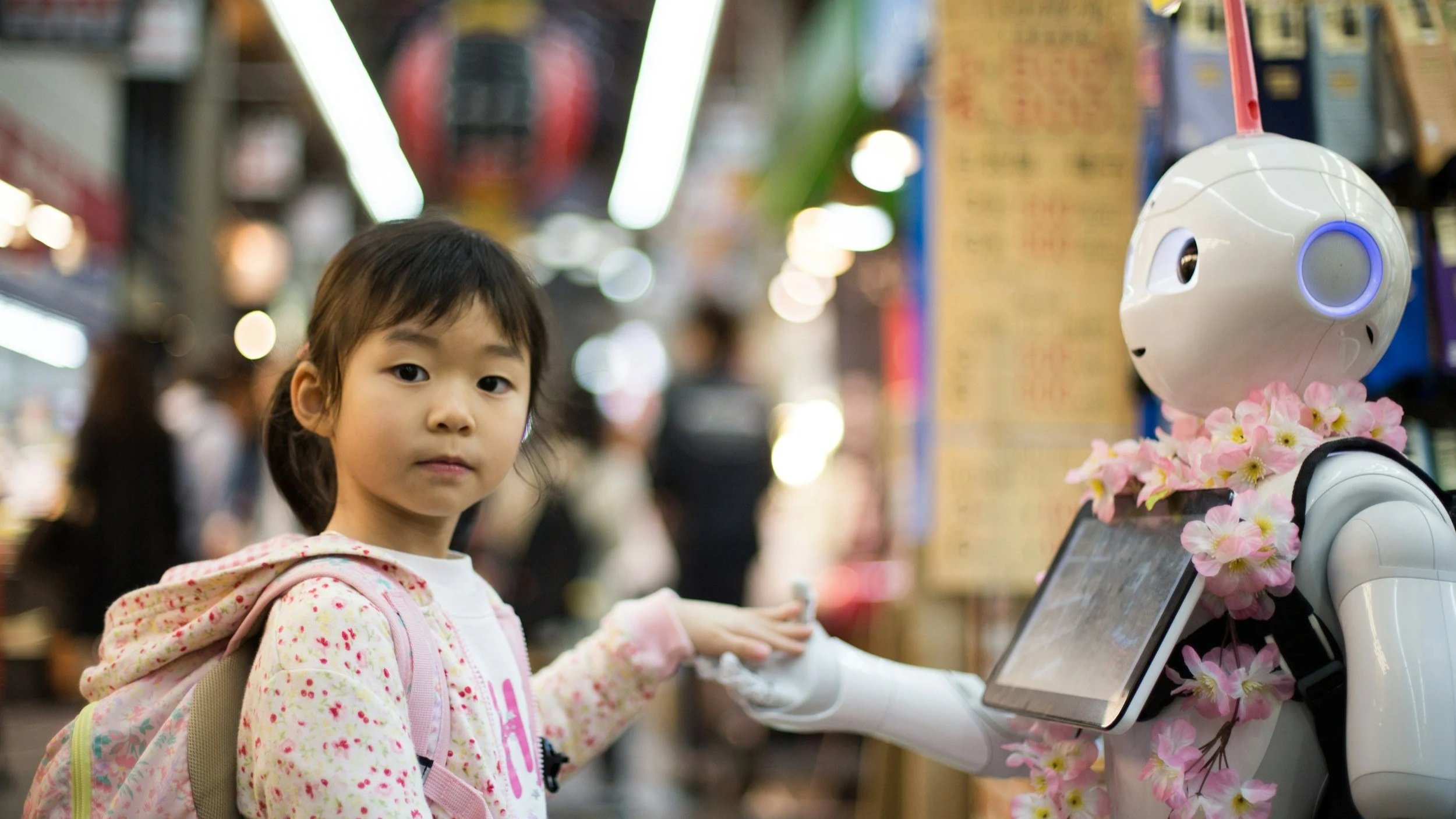
A young learner touching the palm of a young-looking bot
The Algorithm Decides. Only Humans Can Answer
Late one evening, a hospital triage system quietly handed down life‑altering decisions. An algorithm sorted patients by predicted survival rates and resource optimisation. Some were ushered into immediate care. Others were silently pushed down the list.
No one challenged the machine, because it is known to be efficient, precise, and utterly unburdened.
The decision was final.
But when families later asked why their loved ones had been overlooked, there was no one who could truly answer.
Not the software.
Not the data.
Not the algorithm.
This moment reveals a truth at the heart of AI ethics: artificial intelligence can make decisions, but it cannot carry responsibility.
Decision-Making Is Not Responsibility
AI systems excel at decision-making. With enough data and a clear objective, they produce answers faster and more consistently than any human team. In professional environments, this efficiency feels irresistible. Decisions appear cleaner, more “objective,” and less emotionally taxing.
But here is the uncomfortable truth:
A decision is not the same as responsibility.
Responsibility requires:
Ownership
Moral judgment
The ability to say, “I was wrong.”
AI cannot do any of these things.
When an AI system causes harm, listen to the language we use:
“The system failed.”
“The model was biased.”
“The algorithm made an error.”
Notice what’s missing:
There is no who.
This absence is not a technical flaw — it is a moral vacuum.
The Illusion of Moral Neutrality
AI is often described as neutral, free from emotion, bias, or human weakness. This illusion gives it an aura of moral authority, especially in high‑stakes fields like healthcare, hiring, policing, and finance.
But neutrality does not exist in AI.
Every system reflects:
The values of its designers
The priorities of its deployers
The biases embedded in its training data
When harm occurs, responsibility dissolves into abstraction.
AI does not feel guilt.
It does not regret.
It does not lie awake at night wrestling with consequences.
It simply executes.
This is why the belief that AI is “objective” is not just wrong — it is dangerous.
Why Humans Cannot Outsource Accountability
Moral responsibility cannot be programmed into a machine. It emerges from qualities AI does not—and cannot—possess:
Lived experience
Vulnerability
The knowledge that actions have personal consequences
Humans hesitate because we understand loss.
We question because we know we can be wrong.
We feel the weight of decisions because we must live among those affected by them.
AI has no such burden.
Delegating authority to AI without retaining accountability creates a world where injustice becomes efficient — and cruelty becomes scalable.
A Subtle but Dangerous Shift
The real danger is not that AI will seize control.
The danger is that humans will quietly and willingly hand it over.
We begin with phrases like:
“The data supports this.”
“The system recommends it.”
“The algorithm knows best.”
And slowly, responsibility is reframed as inefficiency.
But when harm occurs, someone must still answer.
And it cannot be a machine.
The First Line AI Will Never Cross
AI can support judgment.
It can illuminate patterns.
It can help us see what we might otherwise miss.
But it cannot stand before another human being and say:
“I am responsible for what happened.”
That line belongs to us.
And the moment we forget, that is the moment intelligence becomes dangerous — not because it is artificial, but because it is unaccountable.
A Question Worth Asking
Before trusting any system to make decisions that affect human lives, ask yourself:
If this decision causes harm, who will carry the moral weight of it?
If the answer is unclear, the line has already been crossed.
Further Reading on AI, Ethics, and Human Intelligence
If this topic resonates with you, these works explore the boundaries of AI, human judgment, and the future of responsibility:
School Was Never the Point: How AI Will Return Education to the Individual
https://a.co/d/0OX3VfN5 Lines AI Will Never Cross: Human Intelligence Will Always Win
https://a.co/d/aHN2rhP
Both offer deeper insight into the irreplaceable role of human agency in an increasingly automated world.